Reading the Weather Before & During a Kayak Trip
I have always wanted to be able to easily read the weather without having to look it up online or hear it on the radio. For kayaking, knowing the weather is extremely important.
I have had the misfortune of being out on the ocean having a happy paddling experience when sudden winds picked up and no matter how hard I paddled, I seemed to get nowhere and if I stopped paddling I would get blown backwards.
Let me tell you that is NOT a good feeling. My arms eventually felt like they were going to drop off and I began to have a sudden panic attack that I would never make it back to shore. Ugh!
You would think an experience or two like that would make someone learn to read weather patterns, but I have honestly never taken the time. I have always relied on the friendly weather man or woman but we all know the forecast is not always right and Mother Nature often has a mind of her own.
This year I have decided to at least learn the basics. I am not a very technical person so going into great detail does not interest me. However I will share with you what I have learned so far and hopefully these few basics will help all of us to have more knowledge of the warning signs that tell us the weather could be changing fast.
The Basics to Reading the Weather
The first thing I learned was that I don’t need any special equipment to be able to make good weather predictions. That was good as I had no plans on buying any. Second there are four things that need to be considered for personal weather forecasting:
- Clouds
- Air Pressure
- Nature/Animals/Insects
- Wind
Clouds
There are three main categories of cloud formations:
- High clouds – Could be described as tiny balls or rippled sand, thin veil of ice crystals that form a halo around the sun, or horsetails. These clouds tell of upcoming weather. The ice crystals are created from moisture in the air that is generated by storms in the distance. These clouds can often tell of bad weather coming.
- Middle clouds – Could be described as lumpy or a light grey veil that almost blocks the sun. The middle clouds tell of the weather over a larger area.
- Low clouds – Could be described as puffy, straight or layered, clustered or dark clouds that are not normally visible from directly below. These low clouds are generally a manifestation of current weather.
So in other words, high clouds can tell us of weather to come, middle clouds tell of weather over a larger region and low clouds tell of the current weather in our immediate surrounding area.
Air Pressure
When the temperature changes the air begins to move differently. High pressure means the air is being compressed downwards and is being warmed… consequently we will experience drier and warmer conditions. Low pressure means rain, wind and stormy weather. High air pressure will circulate wind clockwise and low will circulate counter-clockwise. Besides temperatures there are other things that cause air to rise as well such as mountains.
The thing to know here is which way the wind is circulating. If you can figure that out, then you can possibly tell whether the air pressure is high or low.
Nature
Nature is a fantastic way to forecast the weather. Here are some interesting facts that may be useful:
- Low pressure causes insects and birds to fly low.
- Bees will be more active before fair weather.
- Odors are more noticeable in low pressure air.
- Sounds will seem louder in low pressure air.
- Smoke that flattens out indicates bad weather.
- Smoke in a vertical column indicates fair weather.
- A halo around the sun usually indicates rain before the night is done.
- A halo around the moon indicates there can be rain before noon.
- When the sky is crisp and clear and the moon and stars are bright and twinkly it means there is very little moisture in the air (I think most of us knew that one).
Most of us know the rhyme: “Red sky at night, sailors delight. Red sky in the morning, sailors take warning.” Not sure if I have that exactly right but that is how I always remember it. I never really understood what the red sky signifies. Turns out red skies mean there is dust in the air to the west. That is a sign of dry air coming towards you (red sky at night). However the red sky in the morning means the dry air has passed and is being pushed by moisture laden air.
Wind
There is a lot of information on reading the wind and I do not quite understand it all yet. I am going to write about the wind in another post when I have a better handle on it.
Hope this helps a little. It is really the very basics but if we can remember even a few of these tips I think we will be much better off when out on the water and at least possibly be able to make an educated weather guess.
Find more kayaking tips & advice and make every paddling adventure a safe and happy one.
Important Accessories for an Inflatable Kayak
February 10, 2010 by IK World
Filed under Kayaking General
If an inflatable kayak has become your #1 self-powered mode of transportation, recreation and fun then there are a few accessories that you will need to have.
Most of the accessories listed below are essential to have with you at all times, but some you will only ever need if doing a longer excursion.
Accessories you will likely need at some point while using your inflatable kayak:
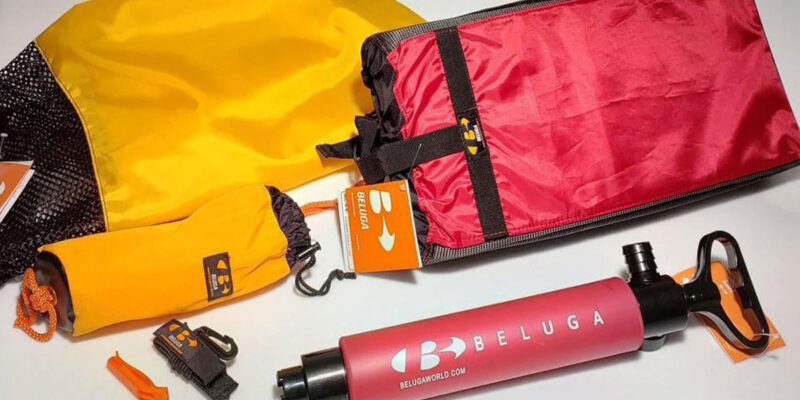
- Bilge Pump – I only ever bring a bilge pump with me if I plan on being in choppier water. It is typical for a little water to get in my kayak while paddling but I have never needed the bilge pump when flat water kayaking. However if there is a chance that you may tip over or that you will be in stronger waves or whitewater then a bilge pump is a very handy accessory to have. Most kayak outfitters will tell you to have one with you at ALL times.
- Boat Sponge – I really LOVE the boat sponge. This is a fantastic accessory for mopping up uncomfortable wetness in the kayak. I didn’t use a boat sponge for several years but now that I have one, I will never go out again without it. It is the most convenient little accessory you could get for your inflatable kayak and it costs next to nothing.
- Cell phone – This is a personal choice of course, but I rarely go kayaking without it. Sometimes I am kayaking out of cell phone range but I still seem to always have it handy. I have never actually used it while kayaking but it seems like a good safety item to bring… just in case.
- Comfortable Seat – Not all inflatable kayaks come with a supportive and comfortable seat. If you don’t find your regular kayak seat to be as good as it should be, I would highly advice looking into a good supportive kayak seat as it makes a massive difference in your overall kayaking experience – not to mention will save you from many aches and pains.
- Dry Bag – If you don’t have a dry bag then you won’t be able to bring anything along with you on your kayaking trip. Dry bags come in all shapes and sizes and can cost very little. As most of my kayaking trips are one day recreational types of adventures I mostly use my dry bag for food, extra clothing, my camera, my cell phone, my repair kit and my car keys.
- Foot Pump – Obviously if you have an inflatable kayak you will need to be able to pump it up. Which type of pump you use will be personal preference but I definitely prefer the foot pump. It is easy to use, weighs next to nothing and takes a lot less effort than a hand pump. Electric pumps can be good too, but even if you use one you will want a foot pump to top it off.
- PFD – A lifejacket is essential for kayak safety and all water safety. I actually very much dislike wearing my lifejacket on hot sunny days while kayaking on a calm lake. However you cannot deny that ultimately anything could happen, including tipping your kayak and bumping your head, so it is very necessary to always wear one.
- Repair Kit – If you have an inflatable kayak, it would have come with its own repair kit. Keep it with you in your dry bag at all times as you never know when you might need it.
- Rope – I don’t always bring rope with me, but it can be an important safety accessory. It is very easy to keep rope stored in your kayak so you might want to add it to your kayaking checklist before you go out for the day. If you are doing an overnight trip I would definitely recommend bringing rope with you.
- Whistle – Store a whistle in your repair kit or you can attach it to your PFD. This is a very easy little accessory to acquire and one that every kayaker should own. Do not go kayaking without a whistle, it could save you in a stressful situation.
Of course there are lots of other accessories you could bring with you, especially some other safety items but these are the main ones to be aware of. The most important thing to remember is that if you are prepared for anything then you can relax and enjoy your paddling experience.
Check out our list of the top kayaking online retailers for the best places to suit up.
NRS Kayak Tow Line
January 29, 2010 by IK World
Filed under Miscellaneous
I had never thought about bringing a kayak tow line with me on a kayaking trip before until I actually came across one and realized how handy it would be to have along for the ride.
It doesn’t appeal to me to have to tow somebody as I would imagine it would take a fair amount of physical effort on my part.
However if someone needed the help it would be nice to have the right equipment with me to be able to help them. Also what if I needed help?
Advantages of a Tow Line
The advantage of having a kayak tow line with you is that if your paddling partner is having any kind of trouble, i.e. fatigue, illness, or boat trouble, you can tow them along until they are able to resume paddling themselves or until you reach the shore.
For anyone kayaking with kids a tow line would almost be a safety necessity to have with you. If your paddling companions are inexperienced they may need a little help to stay on track or to reach your destination.
The tow line I came across is the NRS kayak tow line
. It seems like a really good one, here are the stats below:
- Tow line is stored in a durable 500-denier Cordura bag that has two pockets for additional storage, reflective tape for added visibility, and a mesh bottom for quick drainage.
- It includes 50’ of 3/16” floating polypropyle rope with a foam float and heavy duty plastic clip for easy attachment.
- Rope is attached to the 24” bungee cord with a stainless metal ring to ease towing over high seas.
- Bungee is secured to the waist band with stainless metal ring and heavy duty nylon webbing.
- Sturdy nylon belt with quick release buckle.
- This kayak tow line is not intended for use in whitewater rivers.
Find more information on the NRS kayak tow line
.
Safety Information for Ocean Kayaking
For those of you who love the experience of ocean kayaking there are a few things that need to be considered before starting your trip.
The ocean surf and the weather can be very unpredictable and if you are planning a kayaking trip of any length or distance you will want to check navigation charts, tides and currents, the marine forecast and weather as well as the surf forecast.
To be honest this is not my forte. Anyone who knows me will tell you that I do not possess many navigational skills on land let alone on the water. However, if you follow the right advice you will be just fine. The links I have included below will hopefully help with providing all of the correct information you might need.
Useful Ocean Kayaking Links
Charts for Navigation
Whether you are at home or traveling afar, if you are planning a major ocean kayaking trip you will likely need charts for navigation. There are charts for every area possible so it should be easy to find the information you are looking for. Also be sure to bring a compass along on your trip.
Tides & Currents
Tides and water levels can change quickly whether on the ocean or even while kayaking on a lake. For any longer trips know what to expect so you can make smart decisions.
Marine Forecast & Weather
For obvious reasons checking the weather before you start a kayaking trip is extremely important. I know for myself I have no desire to kayak in high winds or storms and by checking ahead of time I know exactly what to expect and how to plan.
Surf Forecast
Not just for surfers, kayakers need to know the surf forecast as well. If you are kayaking in ocean surf it is critical you check the surf forecast beforehand as waves can turn from fun to scary in the blink of an eye.
Each of the links listed above should help you to be knowledgeable and prepared for any situation. Do the research and be safe… especially on ocean expeditions.
Thinking about doing some ocean kayaking? Check out our inflatable sea kayak reviews for the best in ocean paddling.
Using a Kayak Skeg
Whether your kayak is an inflatable kayak or a hard-shell kayak it will likely have the option for either a rudder or a skeg. A rudder is used for steering but a skeg is simply used to help keep your kayak straight with minimal effort.

There are other specifics that are also important to know so that you get the optimum performance from your kayak. Below we will describe important facts to know about using a kayak skeg. Read more
Getting In and Out of your Inflatable Kayak
January 7, 2010 by IK World
Filed under Kayaking General
If you have begun to enjoy the sport of kayaking, or if you are thinking about starting then it is important to know how to get in and out of your inflatable kayak.
It may seem like a simple thing that does not need much consideration. However, besides getting in and out of your kayak from the shore you may also need to consider getting in from a pier without tipping your kayak, losing your balance and falling in the water. Trust me it is easy to do and quite embarrassing.
Knowing a few tricks on this subject can greatly increase your confidence while kayaking and also allow you to help others who may not be as well informed. Read more
How to Safely Wet Exit and Swim with your Kayak
When a kayak capsizes we are automatically dumped from our kayak. If exiting an overturned kayak has not been practiced it can be a scary experience.
There are a few simple steps that can help to calmly slide out of your capsized kayak and keep hold of your paddle while you are doing it.
If you are recreational kayaking in flat water and are wearing your lifejacket then you do not need to be too concerned about being an excellent swimmer. Hopefully you Read more
How to Empty a Capsized Kayak
Have you ever had the misfortune of tipping your kayak in the water… with you in it? If you are wearing your lifejacket this is usually not that big of a deal. It can happen easily and if it does you need to know how to empty the water out of your overturned kayak. Just a little bit of extra water in your cockpit can greatly affect the balance of your boat and make it very difficult to paddle.
Hopefully you will be kayaking with a partner and will be able to get their assistance. We will go through the steps for emptying a kayak with help as well as having to empty it on your own. These steps can be applied to a hard-shell kayak or to an inflatable kayak. If you are paddling in an open style kayak it will be much easier to empty the water. Read more
NRS Kayak Bilge Pump with Float
I have never personally had to use a bilge pump while kayaking on a lake. However for kayaking on whitewater or on the ocean it would be very wise to have a kayak bilge pump handy.
A bilge pump helps to easily get rid of excess water inside a kayak. It is very easy to use as there is no hose and can pump 8 gallons of water per minute. I personally like the NRS kayak bilge pump because first of all it is inexpensive, second it is a good size (21” long), and third it comes with a float. The float is handy as you don’t want to lose the pump. Also the NRS bilge pump has stainless steel screws which reduce rust build-up. For most kayakers this pump will be great and last a long time.
The NRS bilge pump is available at: NRSweb.com – NRS Kayak Bilge Pump with Float![]()
NRS Deluxe Boat Sponge
December 5, 2009 by IK World
Filed under Miscellaneous
I don’t know of anyone who kayaks who hasn’t had to deal with excess water in the boat. I know for myself even with a spray skirt on water still seems to manage to collect within my kayak… and sand as well!
This NRS deluxe boat sponge is a fantastic accessory for any person who kayaks. It is really neat in that it will soak up sand and moisture that gathers at the bottom of your boat or on your seat.
If you have a lot of water in your kayak then of course you are going to want to use a bilge pump, but for the excess moisture left behind, this boat sponge will do the trick and it is actually quite surprising how much water it can soak up. I personally love it as it keeps the inside of my kayak clean and dry.
It is just little and really easy to carry with you as it weighs next to nothing. It has a terry cloth cover and the dimensions are: 8” L x 4.5” W x 2” H.
The deluxe boat sponge is available at: NRSweb.com – NRS Deluxe Boat Sponge![]()