Understanding the Classification of Kayaks
January 30, 2012 by IK World
Filed under Kayaking General
The kayak was first used and developed by the indigenous Inuit people and used to hunt on lakes, rivers and coastal waters. They were made from seal or other animal skins stretched over a wood or whalebone-skeleton frame.
These small boats were human powered and made to fit one to three people each using a double bladed paddle.
Kayaks have made some major advancements in design and use over time. Today there are three main classifications of kayaks that are constructed and used by people all over the world:
- rigid kayaks
- folding kayaks
- inflatable kayaks
Within these three main classifications there are sub-classifications which include whitewater kayaks, ocean kayaks, recreational kayaks, fishing kayaks, sit-on-top kayaks, as well as a few others.
Below we will take a look at the three main classifications and get a better understanding of what they are and how they differ from each other.
Rigid Kayaks
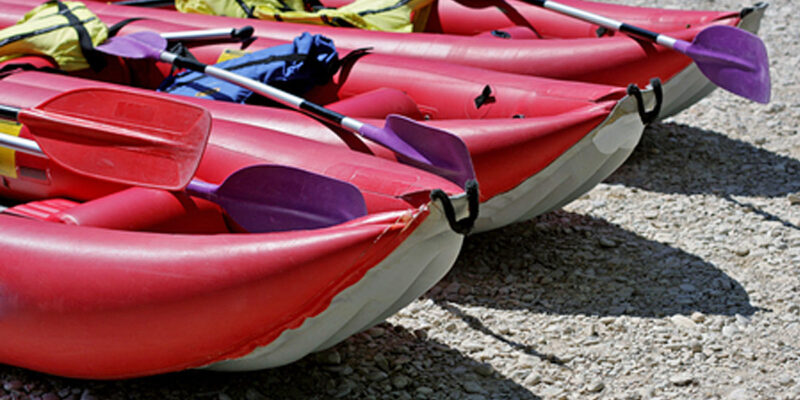
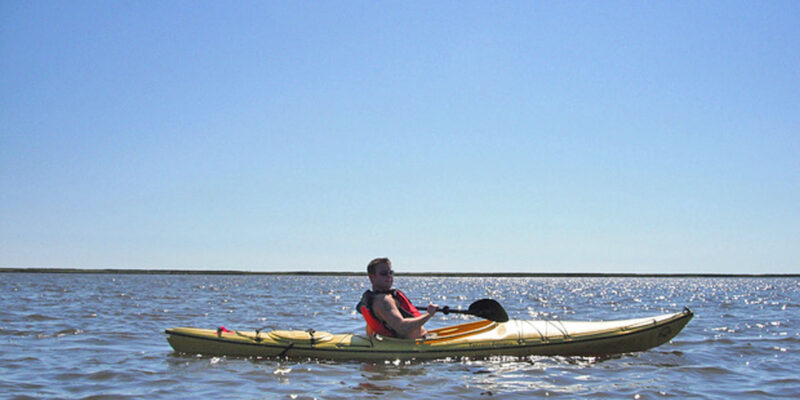
Rigid kayaks are the most well known and are typically made of plastic, fibreglass, wood, carbon fiber or Kevlar.
- Plastic – The Plastic kayaks are often priced quite cheap and therefore very affordable for those who want to purchase a kayak to try out the sport and see if they like it or for those who do not plan to use it often and therefore do not want to invest a lot of money. They are tough and can take a good amount of abuse but repairs are not that easy and they are often not as comfortable as the higher priced models made of other materials.
- Fiberglass – The Fiberglass kayaks are usually lighter in weight as well as better in quality and higher in price than the plastic kayaks. They are designed for the serious paddler who wants a good kayak for a decent price. These kayaks can get damaged more easily than the plastic models but they are also a lot easier to repair.
- Carbon Fiber – Carbon fiber kayaks cost more money and are very light weight. They will appeal to those who want a very good quality kayak that is light enough to easily transport and carry. However one thing to be very aware of with carbon is that it can shatter easily and therefore repairs could be needed often.
- Kevlar – Kayaks made of Kevlar are normally high quality and well made. They are extremely light – even lighter than the carbon and fibreglass models and consequently cost a lot more money. These will appeal to the very well experienced and serious paddler looking for a top of the line model that will offer excellent performance and ease of use. Kevlar is the same material used in bulletproof vests which are used by military branches and police forces… very tough and very light weight.
- Wood – Wood kayaks are in a league all of their own. Their craftsmanship and beauty will depend on who is constructing it. Some are very well made while others are not. The quality, weight and price can differ greatly. They tend to be easily repairable and require very little maintenance.
Folding Kayaks
Folding kayaks have a collapsible frame usually made of aluminum, plastic, wood, or a combination thereof. The frame is covered by a water-resistant and durable fabric.
Some types of folding kayaks have inflatable material and others have air built into the hull which makes the kayak float even if it is flooded with water.
Folding kayaks are typically well made, very durable and often more expensive than a regular rigid kayak. They are ideal for those who want a good quality kayak that is portable enough to bring anywhere and easy to store away. The one negative is that they often take at least 20 minutes to set up.
Inflatable Kayaks
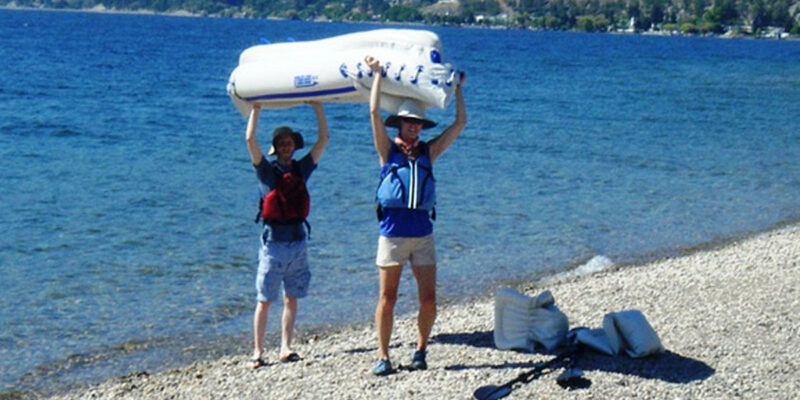
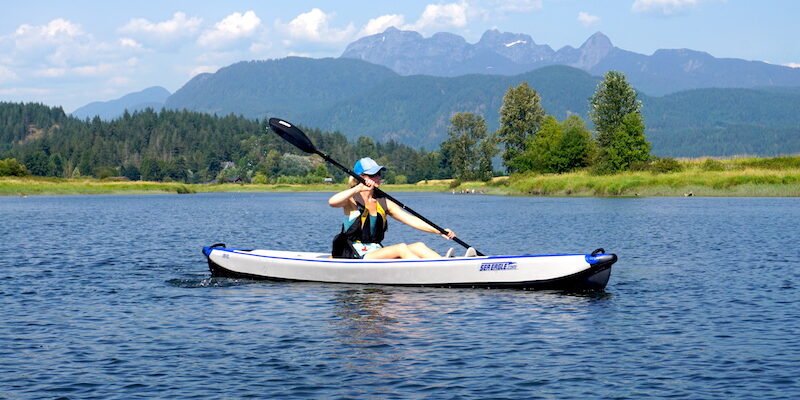
Inflatable kayaks are extremely portable and can usually be carried in a bag or a backpack. They are perfect for those who have limited storage space and want to travel with their kayak.
They are made with either PVC, hypalon, or Nitrylon. Inflatable kayaks have come a long way over the years. Originally known as “duckies” they are now so well made that they are used by the US Coast Guard in many of their rescues.
Their tough construction and durable material means they do not dent and are able to withstand a fair amount of abuse. Prices can vary greatly as can quality and performance. Each year there are more and more well made inflatable kayaks on the market.
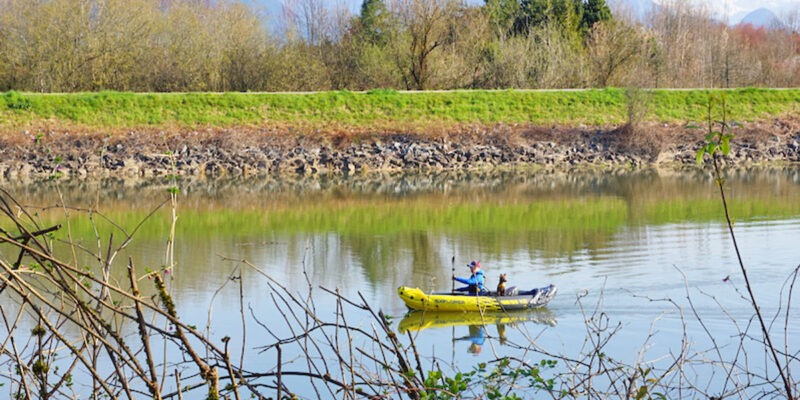
Their popularity is gaining as more people look for easy and convenient ways to get out and enjoy the water. They tend to be very stable and for this reason are great for beginner paddlers and people of all ages.
To learn more about the many different inflatable kayak models available see our inflatable kayak comparison charts.
Build your Kayak Safety Kit
Kayak safety is obviously an important issue if you are going to do any paddling. If you have the proper safety kit on board you can feel confident that you are ready to deal with any challenge that comes your way.
For paddling on open water such as on lakes or on the ocean there are 5 key items you need to include in your kayak safety kit:
Safety Kit Essentials
1. Kayak Bilge Pump
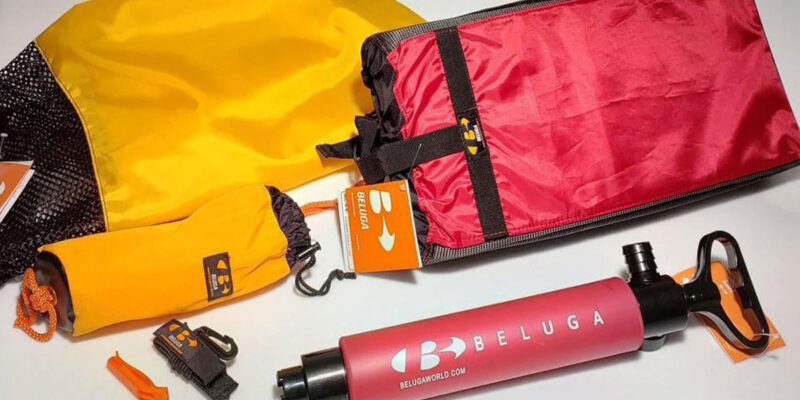
A bilge pump is important because it will help rid your kayak of water if it should capsize or get hit by a big wave. An inflatable kayak is not going to sink even when filled up with water however it will become near impossible to paddle unless you can get the water out of the kayak.
If an accident occurs and your kayak fills up with water you will have to use a bilge pump in order to empty the kayak of water so that you can continue on along your way. A bilge pump is extremely light weight and easy to use and should be kept in every kayak.
A smart idea is to have your bilge pump somehow attached to your kayak, either with tie down bungees or in a bag that is tied to the kayak. That way if your kayak should capsize you will not lose the pump!
2. Whistle
Your whistle should be attached to your PFD. You may never have to use it but if you are ever in an emergency situation and you need to somehow attract attention to yourself, you are going to be very happy that you have a whistle.
Often with the noise of the water, the waves, and the wind it can be difficult for your voice to be heard. A whistle however is much more likely to draw attention to you.
3. Paddle Float
A paddle float is used if you have capsized and need to re-enter your kayak from the water. It slips onto one of the blades of your paddle and is used to help steady the kayak so that you can climb back in.
You may not find a need for a paddle float for re-entering your kayak from calm water, however if you are in heavy wind or choppy waves, the paddle float will become essential.
4. Paddle Leash
A paddle leash can be used in two different ways:
- You can use it to attach the paddle to your wrist
- Or you can use it to attach the paddle to the hull of your kayak
The purpose of course is to stop you from losing your paddle (It can also be a good idea to have a spare 4 piece paddle tucked away in a bag on your kayak). In high winds or choppy water, if you drop your paddle in the water it will be swept away much faster than you would be able to reach it.
If you capsize and you lose your paddle you are in big trouble. Without your paddle there is no way to manoeuver your kayak. However, if you capsize and hold on to your paddle but your kayak gets swept away in the wind or in the waves then you are in even bigger trouble.
For this reason I personally like the idea of attaching my paddle to my kayak. However you will need to make sure that if you should tip you do not let go of the paddle. Otherwise you could be without kayak or paddle.
A paddle leash is especially useful when kayaking in heavy winds or rough seas or if you are doing some kayak photography where there is a good possibility of dropping your paddle in the water.
5. Signal Mirror
I don’t normally bring a signal mirror along with me on my kayaking trips; however I am learning that it can be a very important safety tool. Your whistle will assure that you are heard but the signal mirror will assure that you are seen and is a good idea for paddling in open water.
A signal mirror works like this:
- You hold the back of the mirror close to one of your eyes
- Then you reflect sunlight into your hand
- Then you look through the inner hole in the mirror and you will see a red spot
- You can move the red spot to the target where you want to signal
- The red spot is an optical illusion created by the red reflective material that surrounds the inner hole in the mirror
Build Your Own or Buy Pre-Made
Each of the above items can be acquired separately and then either attached to you or stored in a dry bag on your kayak. Just make sure the bag is secured to your kayak somehow so that if you should capsize you won’t lose all your important safety items.
If you would like to buy a pre-made safety package NRS has two great options:
- A deluxe touring safety kit
that includes each of these five items plus a boat sponge (which is not essential for safety but really helps to mop up water on the floor of your kayak – I use mine all the time).
- Or a basic touring safety kit
that includes a whistle, a paddle float, a bilge pump and a boat sponge.
Their safety kit comes in a yellow mesh deck bag that has reflective tape on it and corner clips that can clip onto your d-rings or your bungee cords. A safety kit will make sure you are totally prepared for any common emergency you may encounter.
Kayaking As an Eco Friendly Choice
Besides being a lot of fun and a good workout, kayaking is also an environmentally safe way to not only enjoy the water but also to travel on the water.
With increased development, population and motorized vehicles on the water, many lakes and rivers have become very polluted. A body of water does not simply stand still, it is a living thing that has a delicate ecosystem and is a habitat for all sorts of aquatic life including for many plants and animals.
There are many reasons why clean water has become much harder to find, but one reason that is known to not only pollute the water but greatly disrupt the ecosystem is the use of motor boats.
Motor Boat Problems
Unfortunately it is quite common for motor boats to leak oil and gas. When these substances leak into the water combined with the oil and gas that ends up in the water from cars, there are significant disastrous results.
What Happens When Oil and Gas Leak into the Water?
Besides the obvious harmful effects of the oil and gas being absorbed by the aquatic life it also causes the body of water to be overfed with certain nutrients. This changes the ecosystem of the water and causes the lake or river to age at a much faster rate than normal.
All rivers and lakes go through a natural aging process where over time they change from water – marsh – swamp – dry land. This process is called Eutrophication and normally takes thousands of years. However with man’s carelessness this process is being sped up by leaps and bounds.
If you do use a motor boat it is important that it is properly maintained. It is also important that the trailer and motor is checked before launching in a new body of water in order to remove all aquatic weeds. A very expensive problem is the introduction of foreign plants and weeds into different waterways because of boat owners who do not clean the bottom of their boats properly.
What happens when motor boats use excessive speed?
Another major problem with motor boats is that when they use excessive speed in water that is too shallow it causes major damage and erosion to the shoreline. This problem is evident in many lakes but the effects will be more obvious in smaller lakes. In time this will completely ruin not only the quality of the water, but the condition of the shoreline, and all life and vegetation surrounding it.
When a motor boat uses excessive speed it disrupts the rooted vegetation and stirs up sediment and bottom nutrients. This completely disrupts the waters ecosystem and results in increased turbidity.
The ecosystem of every body of water is a very delicate balance and when one part is disrupted, the entire system will be upset.
How does the ecosystem work?
The ecosystem of a lake works as follows:
- The plants use sunlight, water and nutrients from the ground as well as carbon dioxide and oxygen to grow.
- Animals then eat those plants and those animals may be eaten by other animals.
- Bacteria then decomposes turning dead plants and animals back into simpler compounds which then can be used as nutrients by plants.
- For all of these things to happen there must be Oxygen.
- Decomposition is vital because without it the body of water would fill up with dead plant and animal material.
If any one of the above steps is affected by water contamination or shore erosion, the whole system is disrupted. Hence the importance of finding safer methods to enjoy the water… such as kayaking.
Why Kayaking?
Kayaking is a self-powered mode of transportation that requires no gas, no oil and does not use excessive speed. Therefore it is a great eco-friendly way to get out and enjoy the water.
There is no destruction to the water, no harmful damage to the shoreline and there is no threat to the ecosystem or the aquatic life. Plus it is fun and a good workout. It is a win – win situation.
Although you may be able to travel further distances at a much faster rate in a motor boat, kayaking offers the advantage of being able to explore areas that motor boats could not access as well as really enjoy the living environment without scaring the ducks, birds, fish and wildlife away.
In my experience, kayaking allows you to really connect with nature and ride with it… a feeling that I have never had while riding on a motor boat.
In Conclusion…
In conclusion if you do find yourself using a motor boat, keep the safety of the environment in mind and keep the boat well maintained and its speed down a notch or two.
However I strongly encourage you to adopt the kayak or an inflatable kayak as a favourite mode of transportation on any body of water. This will help keep the water that we all want to enjoy clean, safe, alive and in existance for a very long time.
Steps to Take Before Buying an Inflatable Kayak
May 2, 2011 by IK World
Filed under Essential Tips
If you have an interest in purchasing an inflatable kayak but haven’t quite made your decision yet there are a few steps you can take in order to make sure you are making the right choice.
Inflatable kayaks can vary greatly on all levels, including in price. Doing just a little bit of research will help you to feel comfortable with your decision.
Below are 4 easy steps you can follow to make sure an inflatable kayak is right for you as well as questions to ask yourself before the actual purchase.
Step 1 – Try Kayaking First
If you have already experienced kayaking then you do not need to worry about this step. However if you haven’t then it is wise to try it out first and see if you enjoy the sport of paddling. Paddling a kayak can be quite different than paddling a canoe and you can easily experience kayaking in two ways:
- Go out with a friend who already owns a kayak or see if you can borrow their kayak for the day… this is especially helpful if they own an inflatable kayak.
- Rent a kayak for a couple of hours – Depending on where you live, it may even be possible to rent an inflatable kayak.
This is a good way to see if you and your family enjoy paddling as well as if you would incorporate this recreational activity into your life.
Step 2 – Take a Kayaking Lesson
By signing up for a kayaking lesson you will learn some excellent and useful safety tips as well as different kayak strokes. If you don’t take a lesson before you purchase your kayak it is recommended that at some point down the road you sign yourself up for at least a one hour lesson just to learn the basics and know the safety protocols. You can also learn a lot online but first hand experience is always best.
Step 3 – Watch YouTube Videos and Read Reviews
Although some local kayak stores do carry inflatable kayaks, they usually do not carry all of the models. Therefore it can be difficult to really get a feel for the inflatable that you may like. Without actually seeing the model in person, the best way to get a feel for it is to:
- a) Look for pictures and reviews online (such as on our website!)
- b) Watch YouTube videos to get a clearer idea of what the inflatable kayak looks like, as well as the setup and how it paddles on the water. This is a great way to see regular people using their inflatable kayaks and can give you the most real life experience without actually being there with the kayak yourself.
Step 4 – Compare the Specs
Once you have read the reviews and seen pictures, you can go to our Inflatable Kayak Comparison Charts and really compare the specs of each model. This will help you to easily compare between several different models as well as to get an idea of the differnt size, weight, load capacity, style and price range of all the different makes and models.
Questions to Ask Before Choosing Your Inflatable Kayak
If you are now sure that an inflatable kayak is right for you then you will need to ask yourself these 4 questions:
1. How often will you go out kayaking? Once you determine how often you will likely paddle, this will help you to decide how much you want to spend. If you just want to take it out once or twice during the summer then you probably don’t need to invest much money into your inflatable. However if you plan on some regular use then it would be wise to spend at least a little more to get a good quality kayak that will last you a long time.
2. Will you be kayaking mostly solo or tandem… or with your family? If you want the option of bringing along a friend or family member within your own inflatable kayak then you will need to look at tandem models or convertible models (where there are two or more seats but the seats can be adjusted to be paddled solo or tandem).
3. How much weight can you carry? Weight can vary greatly so if you will be paddling mostly solo then it is wise to make sure you get a model that is easily carried by you alone.
4.How much weight do you need the inflatable kayak to carry? Load capacity can also vary greatly. Therefore take into consideration your own weight as well as the weight of any friends or family members that will be joining you. Also take into consideration how much gear you will need to bring along, especially if you plan to do multi-day trips.
Paddling an Inflatable vs. a Hard-Shell
Paddling an inflatable kayak is really quite similar to paddling a hard-shell kayak. Depending on the model you choose it may have a slightly different feel as they tend to be a little wider and more stable but in general the feeling is the same.
If you have already tried kayaking in a rigid kayak then you will have no problem with an inflatable. The better quality inflatable kayaks will paddle better than the cheaper inflatable’s just like the better quality hard-shells will paddle better than a cheap hard-shell.
Which one you choose will totally depend on your needs, your budget and how much time you plan to invest in kayaking.
To begin searching for inflatable kayaks see our Top 5 Inflatable Kayak Reviews.
Inflatable Kayak and Canoe Anchor System
March 17, 2011 by IK World
Filed under Featured, Miscellaneous
It is not that easy to find a good inflatable kayak and inflatable canoe anchor system that works well and is simple to pack away.
The Advanced Elements Canoe and Kayak Anchor System is probably one of the best ones on the market.
This anchor system is ideal for those who like to fish as well as for any of us who like to take a break from paddling, have lunch and possibly a nap without floating away.
Designed by an inflatable kayak company it has functionality and portability in mind. It is secure, functional and easy to bring along while traveling.
This inflatable kayak galvanized grapple anchor weighs only 3 lbs. and has some great features.
Kayak and Canoe Anchor System Features
- a sliding collar that keeps the flukes drawn up tight against shank when stowed
- the sliding collar drops to lock the flukes open when deployed
- easy removal from water – simply pull and stow
- portable fold up for easy storage
- 60 ft. of line
- carabineer
- line float
- mesh travel bag for both the anchor and the line
The Advanced Elements kayak and canoe anchor system will work for all inflatable kayaks and inflatable canoes as well as hard-shell kayaks and canoes.
If you are looking for a good anchor system for your paddling adventures this is the one to get.
It is affordable, portable and most importantly works well. It will anchor to most bottoms including sand and rock.
Best Price
As usual the best price I have found is on Amazon.com. At the time of this writing it is selling for $29.99.
What Others Are Saying
There are some excellent reviews on Amazon from people who have purchased this product. Below are a few of the comments…
Good basic kayak anchor – Easy to use, works well, and appears sturdy. All you can ask for in an anchor.
Everything as promised – I bought this as a gift for my son and he loved it. He said for the money it was a great buy and did what anchors are supposed to do, LOL.
VERY well-designed Anchor – Used this anchor new out of the box this past weekend. Very well-designed anchor: compact, locks open for use, locks closed for storage and not punching holes / scratching the interior of my new canoe. Worked very well in shallow muck / weed bottomed lake, which surprised me given the anchor is not that heavy. All in the design I guess… Held canoe in place when a monster Northern Pike broadsided the small 25 3/4″ Northern Pike I hooked. What a fight with 16 ft canoe getting pulled around in circles! Now if only we had had a landing net that was as well-designed as this anchor.
For more information visit Amazon.com – Advanced Elements Canoe and Kayak Anchor System.
Inflatable Kayak Q & A
The popularity of paddling an inflatable kayak is rising as more and more people understand how convenient, affordable and fun they are to use. If you are new to the inflatable kayak world you may have several questions that need to be answered.
Below are five of the most asked inflatable kayak questions:
1. Are inflatable kayaks durable?
The durability of inflatable kayaks can vary greatly depending on the make, model, kayak material and method of construction. As a general rule the kayaks constructed today are extremely durable. In fact they are often used by outfitters to take groups of people down raging rivers where safety and durability are of prime importance.
If you have never used or had any experience with an inflatable kayak you may not be aware of how rigid they are. A decent to good quality inflatable is extremely hard to puncture and with a little care can last a lifetime with very little wear and tear.
The strongest inflatable kayak materials are known to be PVC, Hypalon and Nitrylon. When researching the different models keep in mind the higher the denier count, the stronger the material will be. If you stick with the well known brands such as NRS, AIRE, Sea Eagle, Innova, Advanced Elements, Airis, etc. you will not have any problems with durability.
2. Are inflatable kayaks slow to paddle?
You will likely be amazed as I was at just how fast an inflatable kayak can be paddled. I spent the majority of my life paddling hard-shell kayaks. I have paddled good ones and bad ones and all different types. Some were fast, some were not fast at all. Some had great tracking, some were awful to paddle. An inflatable kayak will be very similar. The speed and quality of the tracking will totally depend on the design and features of the model you choose.
If speed is a factor for you then read the reviews carefully as you can get a good idea at how well they paddle from the viewpoints of others. A kayak with a skeg or a rudder will typically provide better tracking which means that it will require less effort from you to stay straight on course.
3. Is an inflatable kayak stable?
Yes they are extremely stable. The majority of the inflatables I have paddled would be very difficult to tip. Some of them are so stable you can even stand in them. Typically the wider the kayak, the more stable it is, so if stability is a huge factor for you then read the width stats on our inflatable kayak comparison charts to make sure you know what you are getting.
4. Can an inflatable kayak sink if it gets a leak?
I have never heard of an inflatable kayak sinking. Usually there are multiple air chambers so if you do get a tear it only affects one air chamber. This means that it may cripple the performance of your kayak but it will not sink you. You will have no problem getting back to shore to repair the leak (which is easily done with the accessories provided in the repair kit that comes with each kayak).
Leaks can happen but are not as common as you might think. It takes a very sharp object to be able to penetrate the material used in most good quality inflatable kayaks. They are extremely safe and even when filled with water they will not sink.
5. Is an inflatable kayak hard to care for?
One of the best things about an inflatable is that it is extremely convenient to use and easy to care for. When deflating, you simply need to dry it out with a towel, roll it up and store it away in its carry bag. There is very little upkeep to owning an inflatable. Store it away from extreme heat or cold and make sure it is fully dry before putting it away for a season (so as to prevent mold) and you will have no problems.
I would suggest using a 303 UV protectant spray now and again to keep the material strong from exposure to the elements.
To find the right model for you see our inflatable kayak reviews.
Gift Guide for the Kayak Enthusiast
If you are looking for the perfect gift for the kayak enthusiast or if you are simply looking to spoil yourself over the holidays I have compiled a list of great kayak accessories that any kayaker would love.
Many of the below items I own myself and love and some of them are on my own special wish list. They are categorized by price so there is something to fit everyone’s budget.
Gifts for Under $15
- Kayak Ornaments – These are a really cute idea for the person who has everything. They are very inexpensive and can be hung from a tree, from a mirror or from anywhere you choose. There are some really cute ornaments that would make any kayaker smile.
- Dry Bag – If you kayak and you want to bring any type of gear along with you for the ride you will need a dry bag. Dry bags can vary in price depending on what size they are.
- Nose Plugs – These are great for whitewater kayakers who have a habit of taking on some big water and doing lots of rolls.
- Ear Plugs – Same as above, great for whitewater kayaking to avoid water getting in your ears.
- Wetsuit and Drysuit Shampoo – If your kayaking friend uses a wetsuit or a drysuit they will need shampoo to clean it. This tends to be very inexpensive and to last a long time.
- Gear Deodorizer – This is great for getting rid of odors that aren’t easily washed away.
- UV Inflatable Boat Protectant – If you use an inflatable kayak, canoe or boat then you will need some UV protectant to help preserve the quality and life of the material.
- Boat Sponge – An excellent tool for soaking up extra water which really helps with comfort.
- Kayaking Books – There are so many good ones to choose from that talk about everything and anything to do with kayaking.
Gifts from $15 – $30
- Kayaking DVD – Always inspiring to watch.
- Waterproof cell phone case or camera case
- Kayaking Gloves – A must for all season kayakers, whitewater kayakers and from those who suffer from blisters.
- Wetsocks – Will protect your feet in cooler weather
Gifts for $30 – $50
- Kayaking Survival Kit – Hopefully you will only ever need one of these
- Waterproof Cooler – This is a fantastic idea for those who like to bring food along for the ride.
- Rescue Throw Bag
- Water Shoes
- Performance Shirts
Gifts over $50
- H2O Waterproof Headphones – Bring the tunes along with you
- Hydroskin Shirt
- Waterproof Jacket
- Paddle Bag – Protects the paddles and great for traveling
- Drysuit or Wetsuit
- New Paddle
Now for those who really want to splurge… you can never go wrong with a new kayak!
To find the best shops to purchase these gifts see our list of popular kayaking online retailers.
Inflatable Kayaking with Hippos and Crocodiles?
Many of us who regularly paddle in an inflatable kayak know how strong, sturdy and stable they can be. We paddle in lakes, whitewater rapids and in ocean surf. There are sometimes obstacles along the way that might make us a little weary but I think most of us make out pretty good and don’t have anything too serious to worry about.
I came across this great story that made all of my inflatable kayaking experiences seem extremely tame! I can deal with a lot but this guy’s experience was quite impressive… not to mention a little bit nuts!
For Christopher Reichert – a brand new inflatable kayaker – rocks and downed trees were the least of his worries. He chose to take his inflatable kayak out for the first time in water with crocodiles and hippopotamus… good grief!
Christopher Reichert has lived in many parts of the world over the last nine years working and traveling and spent three of those years in Zambia.
In his blog “Life is Never Dull” he recounts how he purchased a two person inflatable kayak from Amazon and had it shipped to Zambia. His first time out was in waters littered with signs warning of crocodiles and hippos.
Although the whole excursion sounds fascinating and vaguely exciting I have to wonder what on earth he was thinking!! I can tell you one thing… he is far braver than I. I have done a lot of ocean kayaking where there is the possibility of seeing sharks but for some reason that does not scare me as much as seeing a crocodile or a massive hippo for that matter – likely because shark attacks are very rare.
Kayaking is a fantastic way to enjoy the natural beauty of different environments and there are ways to avoid any type of predator attacks. However for your first time out I would suggest staying out of the croc and hippo areas or at the very least get yourself the most puncture proof inflatable kayak available!
Christopher’s story and his blog in general are well worth the read. To read the whole story visit his blog ‘Life is Never Dull’ – scroll about half way down the page to read his crocodile story.
Want to experience your own inflatable kayak adventures? Read our inflatable kayak reviews to find the right kayak for you.
Kayaking Aches and Pains – How to Avoid Them
April 8, 2010 by IK World
Filed under Kayaking General
Having always been an outdoorsy and sports minded person I am no stranger to aches and pains. If you are out kayaking for more than an hour it is very plausible that you may suffer from certain uncomfortable body aches.
Common Kayaking Problems
Sore Back
A sore back will be especially common if you are kayaking with a cheap kayak seat. Many kayak seats do not offer proper back support and consequently if you are prone to back aches you will certainly get uncomfortable after a short period of paddling time.
If this is a problem for you it can be corrected by investing in a good high back kayak seat that offers more support as well as possibly using a back band. Both of these items can be purchased at most kayak stores.
Sore Bum
Sitting for a long period of time without moving around much can make for a very uncomfortable bottom even if you have a comfortable seat. This can be alleviated in a couple of ways… you can purchase an extra bum cushion which tends to really help.
Also if you have a stable kayak you can often stand up and stretch, or at least get up on your knees and let the circulation flow back to your poor buttocks.
Overall Body Pains
After awhile you may find that your whole body starts to ache. This can be caused by bad kayaking posture and can really put a damper on your paddling trip.
Be sure to sit up straight in your kayak with your feet propped up against foot rests. By having your feet on the foot rests, this will stabilize your back. Also take the time to learn how to do the proper strokes as you may be putting undue pressure on your shoulders and back instead of mostly using your torso and stomach muscles.
Still Having Problems?
If after using all of the methods above you are still having problems with aches and pains I would highly suggest building up your back and stomach muscles. Many people don’t realize that kayaking actually uses mostly your core muscles.
If you spend a little time building up your stomach and back muscles you will likely notice a major improvement not only in how your body feels while kayaking but also in the amount of control you have over your kayak.
Strong core muscles are essential in many different sports including kayaking.
Besides that just relax, have fun and if you get tired or sore, stop paddling, sit back and enjoy the sun on your face and the wind at your back. Over time you will find that the aches and pains will disappear as you get stronger.
Find more information on kayaking comfort items and keep your body comfortable, happy, and pain free.
Reading the Weather Before & During a Kayak Trip
I have always wanted to be able to easily read the weather without having to look it up online or hear it on the radio. For kayaking, knowing the weather is extremely important.
I have had the misfortune of being out on the ocean having a happy paddling experience when sudden winds picked up and no matter how hard I paddled, I seemed to get nowhere and if I stopped paddling I would get blown backwards.
Let me tell you that is NOT a good feeling. My arms eventually felt like they were going to drop off and I began to have a sudden panic attack that I would never make it back to shore. Ugh!
You would think an experience or two like that would make someone learn to read weather patterns, but I have honestly never taken the time. I have always relied on the friendly weather man or woman but we all know the forecast is not always right and Mother Nature often has a mind of her own.
This year I have decided to at least learn the basics. I am not a very technical person so going into great detail does not interest me. However I will share with you what I have learned so far and hopefully these few basics will help all of us to have more knowledge of the warning signs that tell us the weather could be changing fast.
The Basics to Reading the Weather
The first thing I learned was that I don’t need any special equipment to be able to make good weather predictions. That was good as I had no plans on buying any. Second there are four things that need to be considered for personal weather forecasting:
- Clouds
- Air Pressure
- Nature/Animals/Insects
- Wind
Clouds
There are three main categories of cloud formations:
- High clouds – Could be described as tiny balls or rippled sand, thin veil of ice crystals that form a halo around the sun, or horsetails. These clouds tell of upcoming weather. The ice crystals are created from moisture in the air that is generated by storms in the distance. These clouds can often tell of bad weather coming.
- Middle clouds – Could be described as lumpy or a light grey veil that almost blocks the sun. The middle clouds tell of the weather over a larger area.
- Low clouds – Could be described as puffy, straight or layered, clustered or dark clouds that are not normally visible from directly below. These low clouds are generally a manifestation of current weather.
So in other words, high clouds can tell us of weather to come, middle clouds tell of weather over a larger region and low clouds tell of the current weather in our immediate surrounding area.
Air Pressure
When the temperature changes the air begins to move differently. High pressure means the air is being compressed downwards and is being warmed… consequently we will experience drier and warmer conditions. Low pressure means rain, wind and stormy weather. High air pressure will circulate wind clockwise and low will circulate counter-clockwise. Besides temperatures there are other things that cause air to rise as well such as mountains.
The thing to know here is which way the wind is circulating. If you can figure that out, then you can possibly tell whether the air pressure is high or low.
Nature
Nature is a fantastic way to forecast the weather. Here are some interesting facts that may be useful:
- Low pressure causes insects and birds to fly low.
- Bees will be more active before fair weather.
- Odors are more noticeable in low pressure air.
- Sounds will seem louder in low pressure air.
- Smoke that flattens out indicates bad weather.
- Smoke in a vertical column indicates fair weather.
- A halo around the sun usually indicates rain before the night is done.
- A halo around the moon indicates there can be rain before noon.
- When the sky is crisp and clear and the moon and stars are bright and twinkly it means there is very little moisture in the air (I think most of us knew that one).
Most of us know the rhyme: “Red sky at night, sailors delight. Red sky in the morning, sailors take warning.” Not sure if I have that exactly right but that is how I always remember it. I never really understood what the red sky signifies. Turns out red skies mean there is dust in the air to the west. That is a sign of dry air coming towards you (red sky at night). However the red sky in the morning means the dry air has passed and is being pushed by moisture laden air.
Wind
There is a lot of information on reading the wind and I do not quite understand it all yet. I am going to write about the wind in another post when I have a better handle on it.
Hope this helps a little. It is really the very basics but if we can remember even a few of these tips I think we will be much better off when out on the water and at least possibly be able to make an educated weather guess.
Find more kayaking tips & advice and make every paddling adventure a safe and happy one.