Importance of 303 Protectant for Inflatable Kayaks
May 24, 2011 by IK World
Filed under Featured, Miscellaneous
There is very little care involved with an inflatable kayak. Besides drying it out, cleaning it now and again with an inflatable boat cleaner or an all natural cleaning agent the only thing you really need to concern yourself with is making sure it is UV protected.
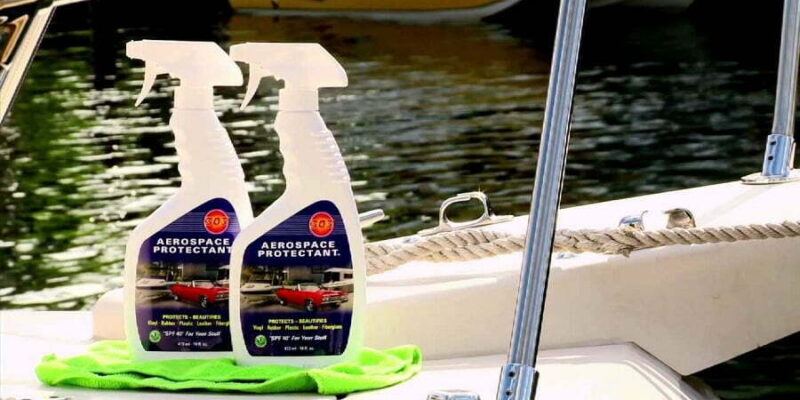
Just like us, inflatable kayaks and inflatable boats need UV protection. UV rays will eventually wear down the material and weaken it. There is a very simple solution to that problem and that is to use a 303 Aerospace Protectant Spray.
If you own an inflatable kayak or an inflatable boat you should definitely have a 303 protectant spray handy. This will literally offer the best protection for all inflatable kayaks, canoes, boats and rafts.
One 16 oz. bottle only costs approximately $15 and it will last a very long time. I have been the same bottle for two years now and I still have lots left. Granted I am probably not using it as often as I should be but it still lasts a very long time.
303 Protectant Features
- Extremely effective UV protection for all inflatable boat materials including Hypalon, PVC and Nitrylon.
- Restores color, shine and gloss without being oily.
- Easy to use – spray on and wipe off.
- Repels dust, soiling and staining and treated surfaces will stay cleaner longer.
- Does not contain any silicone oils, waxes, glycerine or petroleum distillates.
- Besides being good for inflatable kayak materials it can also be used on vinyl, leather, fibreglass, plastic windows and chrome.
- Also improves resistance to chemicals and other types of harmful exposure.
- Non toxic and non-flammable
Proper Use
303 Protectant Spray is guaranteed to work when it is properly used as directed. Therefore below is exactly how to use this UV protectant spray.
- Spray the entire inflatable kayak surface with 303 Protectant while your kayak is dry – really spray it so that it is wet and not just damp. Then wipe the boat completely dry with a clean and dry towel. Polish the boat with a new dry and clean towel to remove any excess 303.
- Once finished your kayak or boat will have a nice shine and look like new.
It is recommended that you spray your inflatable kayak every 30 – 45 days with the 303 Protectant Spray. I personally don’t spray it that often but that is the recommendation for maximum protection.
Word of caution: One word of caution is that after first being sprayed your inflatable kayak material will be quite slick and slippery. So just be aware of this if you are spraying your seat or the area where you will be sitting or standing.
303 Aerospace Protectant Spray will help your inflatable kayak material stay strong for many years. It can be purchased at just about any inflatable kayak or inflatable boat retailer. See our list of inflatable kayak retailers for recommended online stores.
How to Dry Out your Inflatable Kayak
October 26, 2010 by Allison
Filed under Care & Repair
As convenient and fun as an inflatable kayak is the one hassle is drying it out at the end of your kayak trip. How clean and dry you get your kayak after each use will depend on how you are storing it.
I have had a lot of practice with drying my inflatable kayak as well as cleaning it and have a few tips on how to make the process quick and simple.
Personally I like my kayak to be clean when I use it. Therefore I am fairly meticulous at removing all sand, gravel and rocks from it at the end of each use.
Drying my inflatable kayaks is just part of my process as I pack it up to put back in the trunk of my car. I think I am likely pickier about this than most so if I can get my inflatable kayak clean and dry within about three minutes then I think most others could likely do the job even quicker.
Drying Your Inflatable Kayak
If you have the time and it is a sunny day then leave your kayak sitting out in the sun for a short while to dry the surface. If you don’t have the time to sit around and relax for a bit then you can get to work right away.
I always bring two towels with me and leave them in the car while I am kayaking. I usually need the both of them to get my inflatable kayak completely dry.
Begin removing the seats and bags from your kayak and then dry the outer surfaces with the towels while the kayak is still inflated. Most inflatable kayaks dry out real easy so this process goes pretty quick.
From there deflate the floor and then tip your kayak sideways or upside down to drain out any excess water that has gathered inside the kayak. Use the towels to soak up any water that is left behind. While doing this you can also use the towels to clear out any debris within the kayak such as sand, rocks or gravel.
Don’t worry if you can’t get all of the sand and gravel out. As long as the kayak is dry you won’t have any problems.
Then deflate the rest of the kayak and continue to use the towels to soak up any excess moisture. This whole process takes very little time and if you are not too fussy you can probably have it done in a matter of two minutes.
When you roll your deflated inflatable kayak up use the towel to dry off the underneath of the kayak as you are rolling it.
How Dry Does it Need to Be?
If you are using your inflatable kayak at least once a week then you don’t have to be too paranoid about leaving a little moisture. As long as you get the majority of the water out of the kayak you will be fine.
However if you are kayaking less often it will be more important to have your kayak dried out as much as possible in order to avoid mold and mildew buildup (especially if you live in a humid environment).
Storing your Inflatable Kayak Away for Several Months
For several months of the year the weather in my town is extremely cold and my inflatable kayak does not get used. So just before winter sets in I tend to do a major clean out of my kayak before it gets stored away for the cold season.
At this point you can spend a little more time on your inflatable kayak and make sure that you have not only dried it out with a towel but have allowed it to sit in open air to for a little while to make sure it is really dry.
This is normally when I will use my kayak soap and really give it a good clean as well.
Becoming an Old Pro
I promise that after you have dried your inflatable kayak out a couple of times you will become an old pro and find that you can whip through this process really fast.
Keep in mind that the dirt, sand and rocks that will undoubtedly gather inside the kayak are not a problem. The water and moisture is the important part to dry out so that you don’t end up with mold and mildew.
Find more inflatable kayak tips and advice.
Important Accessories for an Inflatable Kayak
February 10, 2010 by IK World
Filed under Kayaking General
If an inflatable kayak has become your #1 self-powered mode of transportation, recreation and fun then there are a few accessories that you will need to have.
Most of the accessories listed below are essential to have with you at all times, but some you will only ever need if doing a longer excursion.
Accessories you will likely need at some point while using your inflatable kayak:
- Bilge Pump – I normally bring my bilge pump with me each time I go paddling even if it is very unlikely I will need it. It is typical for a little water to get in my kayak while paddling but I have never needed to use the bilge pump when flat water kayaking. However if there is a chance that you may tip over or that you will be in stronger waves or whitewater then a bilge pump is a very handy accessory to have. Most kayak outfitters will tell you to have one with you at ALL times.
- Boat Sponge – I really LOVE my boat sponge. This is a fantastic accessory for mopping up uncomfortable wetness in the kayak. I didn’t use a boat sponge for several years but now that I have one, I will never go out again without it. It is the most convenient little accessory you could get for your inflatable kayak and it costs next to nothing.
- Cell phone – This is a personal choice of course, but I rarely go kayaking without it. Sometimes I am kayaking out of cell phone range but I still seem to always have it handy. I have never actually used it while kayaking but it seems like a good safety item to bring… just in case.
- Comfortable Seat – Not all inflatable kayaks come with a supportive and comfortable seat. If you don’t find your regular kayak seat to be as good as it should be, I would highly advice looking into a good supportive kayak seat as it makes a massive difference in your overall kayaking experience – not to mention will save you from many aches and pains.
- Dry Bag – If you don’t have a dry bag then you won’t be able to bring anything along with you on your kayaking trip. Dry bags come in all shapes and sizes and can cost very little. As most of my kayaking trips are one day recreational types of adventures I mostly use my dry bag for food, extra clothing, my camera, my cell phone, my repair kit and my car keys.
- Foot Pump – Obviously if you have an inflatable kayak you will need to be able to pump it up. Which type of pump you use will be personal preference but I definitely prefer the foot pump. It is easy to use, weighs next to nothing and takes a lot less effort than a hand pump. Electric pumps can be good too, but even if you use one you will want a foot pump to top it off.
- PFD – A lifejacket is essential for kayak safety and all water safety. I actually very much dislike wearing my lifejacket on hot sunny days while kayaking on a calm lake. However you cannot deny that ultimately anything could happen, including tipping your kayak and bumping your head, so it is very necessary to always wear one.
- Repair Kit – If you have an inflatable kayak, it would have come with its own repair kit. Keep it with you in your dry bag at all times as you never know when you might need it.
- Rope – I don’t always bring rope with me, but it can be an important safety accessory. It is very easy to keep rope stored in your kayak so you might want to add it to your kayaking checklist before you go out for the day. If you are doing an overnight trip I would definitely recommend bringing rope with you.
- Whistle – Store a whistle in your repair kit or you can attach it to your PFD. This is a very easy little accessory to acquire and one that every kayaker should own. Do not go kayaking without a whistle, it could save you in a stressful situation.
Of course there are lots of other accessories you could bring with you, especially some other safety items but these are the main ones to be aware of. The most important thing to remember is that if you are prepared for anything then you can relax and enjoy your paddling experience.
Check out our list of the top kayaking online retailers for the best places to suit up.
Advantages to Fishing with a Kayak
January 27, 2010 by IK World
Filed under Essential Tips
If you enjoy the sport of fishing you may want to consider using a kayak for your fishing expeditions. I will not pretend that I am a fishing expert… I don’t fish so it is hard for me to give out fishing advice.
However I do have some very good friends who love to go fishing and often use a kayak on their outings. I have learned a few things from them on why they choose to use a fishing kayak and in some of their cases an inflatable fishing kayak.
Advantage # 1
A kayak is very quiet. There is no motor or loud noise. Even I know that fish get spooked by noise and paddling a kayak allows you to find the fish before they have a chance to disappear. Also it helps to create a very calm and serene atmosphere.
Advantage # 2
You will have more access. A kayak can get in and out of places that a motor boat may not have access to. To be able to get into remote areas on lakes, ponds or in the river seems to be a huge advantage.
Advantage # 3
The kayak is quicker. This seemed a bit unreal to me but I am told that when actually fishing the kayak can go much quicker than a trolling motor boat.
Advantage # 4
A kayak is hugely economical. If you ask any kayak fishermen / fisherwomen, they will tell you this is a huge benefit to fishing with a kayak. There is no gas to pay for, next to no upkeep, no storage fees, no repairs, no boat registration, no insurance, no oil, etc.. A kayak is basically a one time fee and with a little care will hardly ever cost you another cent. It is a very economical way to travel in the water and is a no brainer with cost comparison.
Advantage # 5
A kayak can cover great distance A kayak can go a very long way with very little effort. It paddles much more efficiently then a canoe and can tackle all sorts of situations like winds, waves and weather changes.
Advantage # 6
A kayak is totally convenient. A kayak can be easily stored away… especially if you have an inflatable kayak as they can be dried out, deflated and stored away in a closet. Also an inflatable kayak can be transferred to and from the water in the trunk of a car or even taken on an airplane. A hard-shell kayak can be tied up on roof racks within minutes, which is also much easier than transporting a motor boat. The kayak is the ultimate in convenience.
There are lots of kayaks that are very suitable for fishing as well as lots of fishing accessories that can always be added to the kayak.
If you are interested in paddling with an inflatable please check out our inflatable fishing kayak reviews.
How to Safely Wet Exit and Swim with your Kayak
When a kayak capsizes we are automatically dumped from our kayak. If exiting an overturned kayak has not been practiced it can be a scary experience.
There are a few simple steps that can help to calmly slide out of your capsized kayak and keep hold of your paddle while you are doing it.
If you are recreational kayaking in flat water and are wearing your lifejacket then you do not need to be too concerned about being an excellent swimmer. Hopefully you Read more
How to Empty a Capsized Kayak
Have you ever had the misfortune of tipping your kayak in the water… with you in it? If you are wearing your lifejacket this is usually not that big of a deal. It can happen easily and if it does you need to know how to empty the water out of your overturned kayak. Just a little bit of extra water in your cockpit can greatly affect the balance of your boat and make it very difficult to paddle.
Hopefully you will be kayaking with a partner and will be able to get their assistance. We will go through the steps for emptying a kayak with help as well as having to empty it on your own. These steps can be applied to a hard-shell kayak or to an inflatable kayak. If you are paddling in an open style kayak it will be much easier to empty the water. Read more
NRS Deluxe Boat Sponge
December 5, 2009 by IK World
Filed under Miscellaneous
I don’t know of anyone who kayaks who hasn’t had to deal with excess water in the boat. I know for myself even with a spray skirt on water still seems to manage to collect within my kayak… and sand as well!
This NRS deluxe boat sponge is a fantastic accessory for any person who kayaks. It is really neat in that it will soak up sand and moisture that gathers at the bottom of your boat or on your seat.
If you have a lot of water in your kayak then of course you are going to want to use a bilge pump, but for the excess moisture left behind, this boat sponge will do the trick and it is actually quite surprising how much water it can soak up. I personally love it as it keeps the inside of my kayak clean and dry.
It is just little and really easy to carry with you as it weighs next to nothing. It has a terry cloth cover and the dimensions are: 8” L x 4.5” W x 2” H.
The deluxe boat sponge is available at: NRSweb.com – NRS Deluxe Boat Sponge![]()
Types of Inflatable Kayak Materials
December 1, 2009 by IK World
Filed under Kayaking General
The two most well known inflatable kayak materials are PVC and Hypalon. There is also a newer material being used now called Nitrylon. Each has their positives and negatives and many people have opposing view points on which is the best to use (with regards to inflatable kayaks and other inflatable boats). They are used because they are all extremely rugged and durable, though some better than others. It may not affect your choice of which inflatable kayak to purchase but it is interesting to understand the difference between these materials. Read more
Kayaking Books
November 8, 2009 by IK World
Filed under Books & DVDs
Below is an array of popular kayaking books that may be of interest. These books cover everything from whitewater safety, to canoeing, to kayak fishing to safety guidelines and also just some pure entertainment. Learn everything you need to know about paddling on the water.
Kayaking DVDs
November 6, 2009 by IK World
Filed under Books & DVDs
Below is an array of kayaking dvd’s with topics including paddling adventures, whitewater kayaking, sea kayaking and much more. These make great entertainment as well as excellent gifts for anyone who loves kayaking. Learn safety precautions, guidelines, tips, advice and see some phenominal kayaking shows.