Winter Kayaking Gear Guide
November 8, 2010 by Allison
Filed under Essential Tips
As long as the water is not frozen and you have the proper gear to keep you insulated and dry then you are good to go for some exhilarating winter kayaking.
It is easy to get house bound in the colder months but if you can force yourself to get out there you will find that kayaking in the winter can be a lot of fun. There is no hot sun shining on you so you may find that you can paddle much further distances than in the summer months.
The main requirement for cold weather kayaking is to be sure you have the right winter kayaking gear. It will be essential to your comfort, warmth and safety.
Winter Kayaking Gear Checklist
Winter kayaking clothes tend to be more expensive than summer kayaking gear. However I find that it is really a one time purchase as most of it will last a really long time. Each person’s level of cold tolerance is a little different but there are a few basics everyone will need to have. There are four main areas to be concerned about…
- Comfortable and Cozy Feet
If your feet are cold and/or wet you will not be happy. It is very important to make sure your feet are warm and cozy. For this you will need a good pair of wetshoes or waterproof boots as well as a pair of wetsocks. The socks combined with the neoprene booties will draw moisture away from your skin and keep your feet warm.
I personally use the NRS Paddle Wetshoe along with the NRS Hydroskin Wetsocks. I tend to use the wetshoes in the fall weather and then add the socks for the winter months. These wetshoes are one of the most comfortable pair of booties I have ever worn. They are equally as comfortable with bear feet as they are with socks. I find these wetshoes along with the watersocks to keep my feet ample warm for year round paddling. - Warm Hands
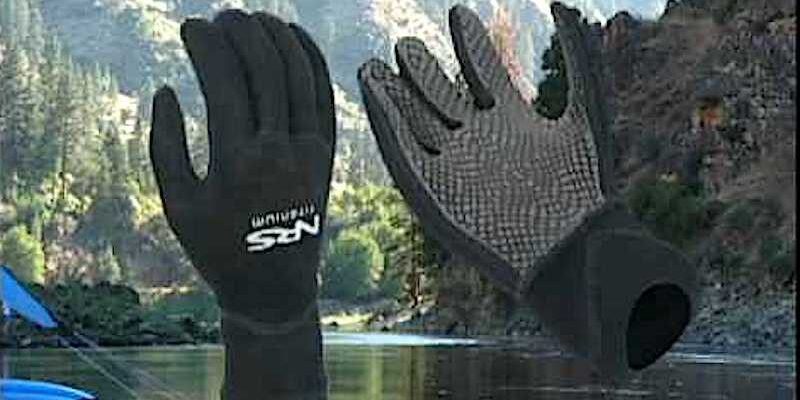
If your fingers get cold they tend to tighten up which can be dangerous when out on the water. Get yourself a good paddling glove. There are different levels of protection from light protection to toasty mitts. Be sure to get a pair that will suit your cold weather. - Protect Your Head
You will lose the most heat from your head so it is important to keep it covered. What type of head protection you use will depend on the type of kayaking you are doing. For easy lake paddling I tend to simply use a fleece toque. However for ocean or whitewater kayaking you will likely want a neoprene type hood. You can get a warm neoprene skull cap that fits snugly under your helmet or under your waterproof jacket hood.
Another thing to consider if you are going to be getting some serious water on your head is a pair of ear plugs. Freezing cold water dribbling in your ear can be extremely dangerous. It can not only be annoying but it can disorient you for a short time. These would only be necessary for heavy whitewater kayaking or sea kayaking in rough water. - Keep Your Core Warm with Layers
Next of course you need to focus on keeping your body warm. The best way to do this is with layers. Your fist layer will be a moisture wicking top such as a Hydroskin shirt and bottoms. This will draw water away from you while trapping in your body heat. Then you will need your insulation layer which in my case is normally a comfortable fleece top and fleece leggings.
From there you will need your top layer which will be a waterproof jacket and pants. All of these layers will keep you extremely warm and cozy, however you may not need them all if the weather is not totally freezing. The most popular cold weather paddling gear for keeping your body warm and dry are the wetsuit and the drysuit.
Important Tip: The most important thing to remember with layering is not to wear cotton! Cotton will soak up the water and hold it against your skin. Wearing cotton is the quickest way to freeze while paddling.
Wetsuit or Drysuit?
Two popular cold weather outfits for paddling are the wetsuit and the drysuit.
The Wetsuit is a one piece jumper suit that draws moisture away from your body and traps in your body heat. This suit makes an excellent base layer and works best in moderate weather with temperatures 50 degrees or higher. It is also ideal for colder weather with added insulation worn on top. Most kayakers love the wetsuit and if you plan on doing much winter kayaking it is an excellent investment to make.
The Drysuit is normally made with Gore-Tex and will keep you very warm and very dry. The Drysuit is very popular with avid cold weather kayakers as it will ensure a warm and dry trip. However it also tends to be quite expensive so I wouldn’t recommend investing in one unless you really plan to use it a lot. It you can get one on a good sale you will love owning this piece of kayaking gear and will probably find you will look forward to the winter paddling months even more.
Where to Buy Winter Kayaking Gear?
Any kayaking shop will offer winter kayaking gear but there is one place that is my favorite. NRSweb.com in my opinion has the best selection and often the best prices. Browse their large selection to see if they have what you need:
Also check out their clearance rack for special deals:
How to Dress for Cold Weather Paddling
October 20, 2009 by IK World
Filed under Clothing & Footwear, Kayaking General
If you have fallen in love with kayaking you will not want to stop once the weather turns chilly. Kayaking in the cold weather can be invigorating, great exercise and a lot of fun. The most important thing for an enjoyable ride is to be dressed properly for the cold water, the wind and the icy air. Below are some tips that I have learned over the years from not dressing properly for the cold weather.
Tips for Keeping Warm while Cold Weather Paddling
Tips # 1 – Do not wear cotton! 
This is the most important tip to know while kayaking in the cold. I have made this mistake before and trust me it is a bad mistake. Cotton will soak up the water and hold it against your skin. If the water is cold and the wind is even colder you are going to freeze. I wore a cotton top underneath a waterproof jacket thinking that I would be okay. Nope – I froze. It was a bad idea and one I won’t ever do again. My inexperience made for a very unenjoyable and quick kayak trip.
Tip # 2 – Wear layers
Your first layer should be a top that wicks that moisture away from you. I would highly recommend a HydroSkin shirt that is lightweight and comfortable. It will reflect your body heat back to you while minimizing water absorption. Your second layer needs to be your insulation, so either an insulating sweater or my preference is a comfy fleece. Your top layer of course is your waterproof jacket and pants. These will protect you from the elements and keep you ultra warm and comfy.
Tip # 3 – Protect your extremities
It is of utmost importance to keep your feet, hands and head dry and warm. If any or all of these are wet and cold your trip will be cut very short – believe me.
- Waterproof booties are essential. If the weather is really cold you may also want to add some water socks for extra warmth and protection.
- A good pair of warm kayaking gloves should always be warm. It is simply not worth allowing your fingers to freeze. My personal favorite that I have used for the past three years are the NRS Utility Paddlers Glove.
- Next is your head. I cannot stress enough how important it is to keep your head warm. If you do not wear a hat, your whole body will be losing heat. I am never out kayaking in the winter or fall without my fleece toque. If you are whitewater kayaking chose a thin layer hat that will fit under your helmet.
What is the Difference between a Wetsuit and a Drysuit?
Wetsuit – A wetsuit is a one piece jumper style suit that basically traps in our body heat and keeps us warm. They are very popular with kayakers and are usually worn as a base layer with extra insulation on top. These are best used in moderate weather where the temperature is 50 degrees or higher. A wetsuit is an extremely handy piece of kayaking gear that many paddlers swear by.
Drysuit – A drysuit is usually made with Gore-Tex and will not only keep the heat in but will also keep the water out. If you wear insulating layers under your drysuit you will be completely dry and very toasty. A drysuit is an excellent piece of paddling wear to own but they are also highly expensive. Unless you are an extreme kayaker who likes to paddle in very cold weather you will likely not want to spend the money on one. For most of us recreational kayakers the standard wetsuit will work just fine.
Final Thoughts on Cold Weather Paddling
By wearing the right kayaking gear there is no reason to stop kayaking when the weather turns cold or in harsh environments. If the water still moves, we can still paddle. The simple trick is to stay warm and dry.
Check out our reviews on popular kayaking gear.
NRS Paddlers Glove
October 4, 2009 by IK World
Filed under Clothing & Footwear
I have used these gloves for almost three years and they are the best gloves for kayaking that I have tried. They are really tough and after three years of use, mine are still in excellent shape. They are extremely durable and feel great on.
Features of the NRS Utility Paddlers Glove:
- The back of the hand is 2-mm neoprene with Titanium which adds warmth and there are 3-mm pads that add protection against impact.
- The palm and fingers are constructed of rugged yet flexible Amara™ synthetic leather.
- Super-tough armored patches on key wear areas offer unmatched protection for active paddling, rowing and rope handling.
- GripCote™ on palm and fingers gives excellent grip and added durability.
- Wristband with hook and loop closure offer a more secure fit.
- They are warmer than HydroSkin® Gloves and not quite as warm as Navigators™ ,Paddlers Gloves™ have the best palm protection that NRS offers.
The Paddlers Glove will completely protect your hands from the weather, from blisters and from impacts.
The only thing I found was that in hot weather my hands would sweat. I still wore them in the heat of the summer if I was paddling for any length of distance but I probably would have done better with a pair of gloves with no fingers.
However they still worked wonders for me and for all other types of weather and for anyone looking for the ultimate in hand protection… I would definitely recommend them.
The NRS Paddlers Glove is available for at NRSweb.com – Paddlers Glove
.
Find more reviews on other popular kayaking apparel.
Paddling Techniques
Having good control of your kayak will come from coordination and balance as opposed to brute force. Using the right paddling techniques will help to ensure that your ride is smooth, enjoyable and also fairly dry (unless you decide to brave the whitewater rapids).
Many people mistakenly believe that power when paddling a kayak comes from the arms. The truth is that the strength actually comes from the torso (trunk rotation) first, leg pressure second and the arms third as merely a bridge between the power source and the paddle.
As a beginner kayaker, there are three main paddling techniques that are essential to learn before you begin your ride. The forward paddle, the reverse paddle and of course turning the kayak. All three of these are very easy to learn and will
definitely help you to smoothly make the transition into a seasoned kayaker. Read these notes and then get on the water, start practicing and have some fun! Remember you will paddle faster, easier and further if you perfect your paddling form.
Forward Paddle
(front to back)
This will be your most commonly used paddle stroke. Be sure that you are sitting up straight in the kayak, don’t slouch back. Also make sure that your feet are right up against the foot rests in your kayak as this will help you to have a more powerful stroke. Now relax your grip so as to avoid wear and tear on your hands (a good pair of kayak gloves like the NRS Paddlers Glove
will do wonders to stop painful scrapes and blisters). You want to place the paddle in the water close to the kayak around where your feet are and make the stroke deep. Pull backwards and you’ll be gliding through the water.
Reverse Paddle
(back to front)
You will not use this paddle as much as the forward paddle but it is just as important to master. For this technique you want to use the back of the paddle blade. Instead of inserting the paddle near your feet (as in the forward paddle), put the paddle in the water near your hips instead. Now push the paddle toward the trunk of your kayak while turning your torso. If you want to have more power with this stroke reach further behind your hips when placing the paddle in the water. A key point to remember here is to keep your elbows bent in order to avoid injuries and pull the blade out of the water when it is even with your knees. Always keep checking over your shoulder behind the kayak to make sure that there is nothing in your way.
Turning the Kayak
You can imagine why it is extremely important to learn how to turn your kayak properly. Failing to do this could cause some pretty unnecessary crashes. The most effective way to turn a kayak is to do a deep reverse stroke (back to front) on the side of the direction you want to turn. Many people will do the opposite and do a forward paddle on the opposite side of the direction you want to turn but this is not nearly as effective.
After learning these three strokes you are ready to go out and enjoy the water.
Finding the Right Inflatable Kayak Gear
June 19, 2009 by IK World
Filed under Essential Tips
Having the right gear for your inflatable kayak expedition can literally make all the difference for an enjoyable ride. If you have already chosen a kayak, now you are ready to suit up. This does not need to be an expensive process as there are really only a few basics you need to be concerned with.
Necessities:
Paddle
Many kayaks will come with a paddle, but some will not. Which type you choose will depend on the type of kayaking you want to do. There are basically two kinds of paddles, touring and whitewater. Read our article on choosing the right kayak paddle length before purchasing so that you know exactly what you will need. These are the choices you will have when purchasing a kayak paddle:
- Touring kayak paddle – These are made for efficiency and comfort. They are usually two pieces with adjustable ferrule positions which allows for feathered or unfeathered paddling. You will be able to choose the length, the blade shape as well as the material of your paddle.
- Whitewater kayak paddle – These paddles are all about control so they will have a rigid shaft and wider blades. Again you will be able to choose the length, blade shape and material of your paddle.
Double Action Pump
An inflatable kayak needs to be pumped up. It is wise to invest in a good hand or foot pump. If your kayak is hard to inflate you will most likely be less inclined to use it. Having a good pump will make inflating your kayak a quick and easy process and therefore provide for an overall happier experience.
Dry Bag
Having a waterproof kayak bag allows you to store things like extra clothes, sunscreen, a compass, food, a camera, or anything else you’d like to take with you on your excursion that needs to be safe from the elements. They come in all shapes and sizes so there is one to fit everyone’s need.
PFD (Personal Flotation Device)
A lifejacket is needed for the obvious safety reasons. Though it can be tempting to not wear your lifejacket on hot days and while in flat water, I must caution you that there are huge safety risks to doing this. A kayak can capsize at anytime for a multitude of reasons. Even if you are a good swimmer it is essential that you wear a PFD.
Spray Skirt
Unless you are always going to be kayaking in calm waters a spray
skirt will be necessary. The spray skirt connects to the cockpit of the kayak and essentially creates a watertight seal. This will keep you as well as the inside of your kayak dry. When purchasing your inflatable kayak, many companies will suggest a spray skirt that is right for your boat.
Crash Helmet
Only necessary if you are doing whitewater kayaking.
Luxuries
Kayaking Gloves
It is really personal preference whether you will want a pair of kayaking gloves to wear. Some people love them and others hate them. I can tell you from first hand experience that a good pair of kayaking gloves will save your hands from unnecessary blisters, cuts and scrapes. They will help you to be able to kayak much further with absolutely no pain (to your hands anyway). Though on super hot days they may seem like a slight nuisance, your hands will be much happier having them on.
Compact Cart
This will make either rolling from car to water or strolling through an airport effortless. You just strap your inflatable kayak duffel/storage bag to the frame and away you go. Well worth the few extra dollars!
Drytop/Paddle Jacket
I have personally never used either of these, however there are others who will never go out without one. On hot summer days while doing easy recreational kayaking, I don’t find them necessary. I usually just have a light waterproof rain jacket with me in case it should get drizzly. I can see though that if you are way out in the ocean or in the whitewater rapids, a drytop would really help you to stay comfortable. Depending on the weather as well as how long of an excursion you plan on doing, a drytop may make a huge difference.
Water Shoes/Booties
A good pair of water shoes will be extremely helpful to have. Your feet will inevitably get wet while getting in and out of your kayak and possibly within your kayak. With water shoes, you simply don’t have to worry about it. Make sure they are not clunky and that you fit easily in your kayak while wearing them.
Rope Bag
Hopefully something you will never need to use, however it is a great safety device that could help save the life of a friend.
Knife
Admittedly I have never carried a knife with me kayaking. However I also tend to do fairly short excursions. Some die-hards though will always have one with them. You will probably never use the knife, however it is handy to have should the unlikely event happen where you get caught up in some rope or stuck under a raft.
For the best selection of inflatable kayak gear check out our list of top online retailers for kayaks and gear.